

When COVID-19 hit in 2020 and border closures disrupted cross-border trade, the much-demanded pineapple in Burkina Faso became scarce. Imported fruit became harder to obtain, according to Oumarou Compaoré, a farmer who saw the disruption as an opportunity to produce the fruit locally.
Pineapple had long been viewed as an exotic fruit more commonly grown in Burkina Faso’s coastal neighbours. In the country’s western region, cotton, maize and sorghum were far more familiar crops.
But in the midst of that chaos, Compaoré saw a light. He began experimenting with pineapple production, despite the perception that the crop was not suited to Burkina Faso’s dry conditions.
His farm, Djoda, had been formalised in 2018, but the pineapple project itself began in 2020, when the COVID-19 pandemic disrupted the supply of imported fruit. Compaoré said the shortage made locally produced pineapple easier to sell.
“I saw that pineapple was becoming scarce on the market because of the closure of the borders,” he told local media. “That is why I seized the opportunity to develop this crop in Burkina Faso.”
The experiment was not immediately successful. With the help of agricultural specialists, Compaoré went through several failed attempts before adapting pineapple production to the local agro-climatic conditions.
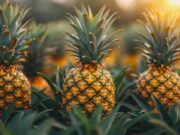
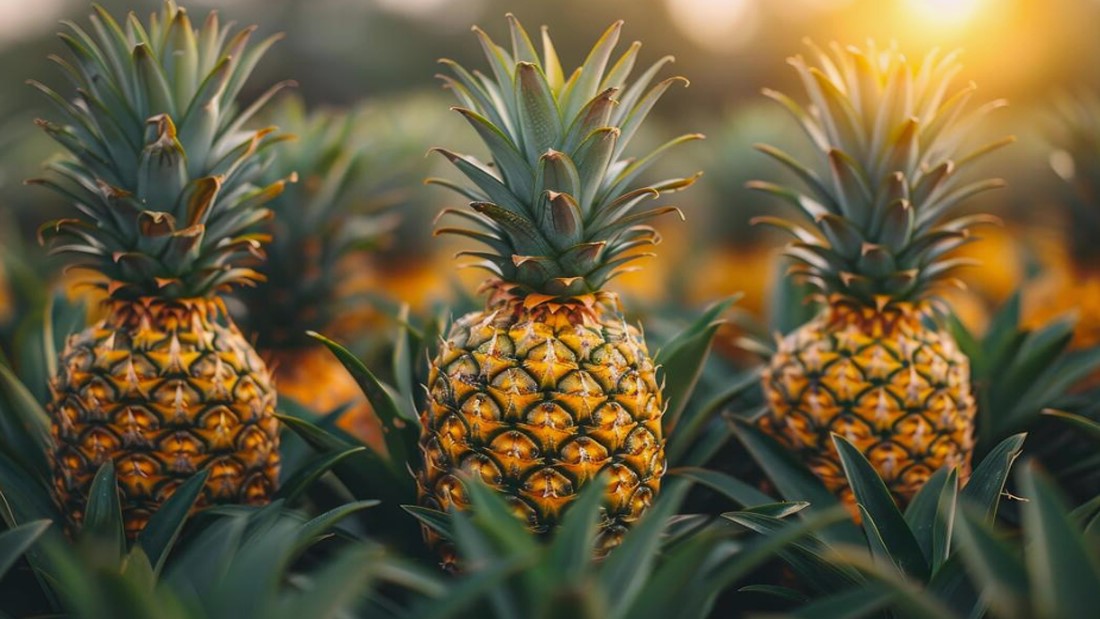
The result is now visible at Matourkou, near Bobo-Dioulasso, where rows of pineapple plants grow on sandy and stony soil.
The development challenges an old perception about what can be grown in Burkina Faso’s Sahelian environment. Compaoré said people had told him that the area was suitable mainly for crops such as cotton, maize and sorghum.
“There were stereotypes. We ourselves were victims of this,” he said.
But the significance of the experiment is not that pineapple is biologically impossible to grow in Burkina Faso. Rather, it demonstrates that commercial pineapple production can be adapted to conditions in a country where the crop has traditionally played a limited role in agriculture.
Today, Compaoré’s pineapple operation covers about 50 hectares. His experiment has also encouraged other farmers to enter the sector. An agricultural engineer working with the farm estimates that more than 100 farmers are now getting into pineapple production, while the regional director of agriculture, Adanabou Eric Pascal, said pineapple fields in the administrative region had expanded to around 100 hectares by November.
The expansion is happening as Burkina Faso’s authorities pursue a wider policy of reducing dependence on imported food. Pineapple has now been incorporated into the government’s agricultural development plans as part of efforts to increase domestic food production and strengthen food self-sufficiency.
The government has also supported pineapple cultivation through institutional agricultural projects. A 5.5-hectare pineapple farm at Matourkou was established by the Conseil Burkinabè des Filières Agropastorales et Halieutiques, with an expected production of about 400 tonnes.
But the available data reveal a more complicated picture than the growing fields might suggest. Burkina Faso does not appear to have publicly available comprehensive government data showing its total annual pineapple production. The Associated Press, reporting from Bobo-Dioulasso, also noted the absence of available government production data.
Trade data, however, provide an indication of how much the country still depends on external supplies. In 2020, the year Compaoré said the pineapple shortage caused by border closures prompted his experiment, Burkina Faso officially imported about 793,640 kilogrammes of fresh or dried pineapple, worth about US$21,360, according to World Bank data sourced from UN Comtrade. The imports came principally from Benin and Togo, with smaller quantities from Côte d’Ivoire, China, France and other countries.
This means that imports continued, although Compaoré’s account indicates that cross-border disruptions affected availability in local markets.
Four years later, the import figures were substantially higher. In 2024, Burkina Faso imported about 4.40 million kilogrammes of fresh or dried pineapple, worth approximately US$64,640. Benin supplied about 2.55 million kilogrammes, while Togo supplied another 1.84 million kilogrammes.
That is more than five times the quantity recorded in 2020. At the same time, Burkina Faso was also exporting pineapple. In 2024, the country exported about 1,850 kilogrammes of fresh or dried pineapple, worth US$1,650, principally to Senegal.
The numbers therefore present an important contradiction to any suggestion that Burkina Faso has already replaced imported pineapple with domestic production. The country is growing more of the fruit locally, but it continues to import millions of kilogrammes.
There is another interesting development in the trade data. Burkina Faso exported about 3 million kilogrammes of fresh or dried pineapple to Togo in 2024, according to the partner-country data, while its own reported export data records only 1,850 kilogrammes for that year.
The discrepancy means the figures should not be casually interpreted as proof of the exact volume of pineapple leaving Burkina Faso. Differences between exporter and importer records can arise from reporting, classification and timing issues.
But the data nevertheless show that Burkina Faso is participating in the regional pineapple trade while simultaneously importing substantial quantities. For Compaoré, the attraction of pineapple cultivation is therefore not only about replacing imports. It is also about whether the crop can provide a viable alternative for farmers.
In one reported trial at Djoda Farm, Compaoré achieved a yield of 108 tonnes per hectare, compared with about 50 tonnes per hectare during his earlier attempts. He estimated that even after accounting for a 20 per cent loss, the harvest would remain commercially viable. These are farm-level figures reported by Compaoré, rather than nationally verified yield statistics.
Other farmers have also begun entering the business. Kaba Séré, who was inspired by Compaoré’s work, has expanded her farm to about 60,000 pineapple seedlings. She said the experience demonstrated to her that pineapple production was feasible in Burkina Faso.
But producing pineapple in Burkina Faso still comes with substantial challenges. Farmers require planting materials, fertiliser, irrigation and transport. The crop also has a relatively long production cycle, while high temperatures and water availability create additional pressure.
Compaoré’s experience illustrates one of the less obvious problems of agricultural self-sufficiency: producing the crop locally is only one part of the equation. Farmers also need access to the inputs required to produce it, infrastructure to move it and markets capable of absorbing the harvest.
In the early stages of his experiment, Compaoré relied on planting materials from outside Burkina Faso. The farm has since developed the capacity to produce planting material locally, reducing one of the barriers to expansion.
The government’s interest in the crop also raises a larger question about what Burkina Faso means by self-sufficiency. The country can demonstrate that pineapple grows locally without having eliminated its dependence on imported pineapple.
The 2024 trade data make that clear: approximately 4.4 million kilogrammes entered the country from abroad, while only a small volume was recorded in Burkina Faso’s own export statistics. At the same time, the absence of comprehensive national production data makes it difficult to determine precisely how much of domestic demand is now being met by Burkinabè farmers.
This is where the pineapple story becomes bigger than the fruit itself. Burkina Faso has demonstrated that pineapple can grow commercially in an environment where many people once considered it unsuitable. Farmers are expanding their fields, government institutions are investing in production, and more growers are entering the sector.
But the available evidence does not yet demonstrate pineapple self-sufficiency. What it demonstrates is an agricultural experiment in progress. For now, the pineapple fields of Matourkou have challenged one assumption: that the crop cannot be commercially produced under Burkina Faso’s conditions.
The next question is harder. Can local production grow enough, efficiently enough and consistently enough to significantly reduce the country’s dependence on imported fruit? The available national data cannot yet answer that question.
What the data do show is that Burkina Faso’s pineapple sector is growing at the same time that the country continues to import millions of kilogrammes of the fruit.
And as the authorities race towards food self-sufficiency, the pineapple growing in the country’s dry landscape may prove less important for what it has already achieved than for what it reveals about the limits of Burkina Faso’s agricultural ambitions.
Source: African Angle