



Green for Change Ghana has been named African Environmental Sustainability and Climate Resilience Organization of the Year at the International Business Achiever Awards (IBAA 2026), recognition that puts a spotlight on a model built around a specific bet, that environmental restoration only works when it’s paired directly with livelihood improvement.
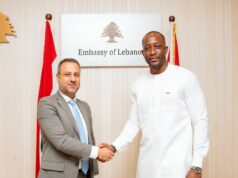
The organisation, which works at the intersection of climate action, natural resource management, sustainable livelihoods and community development, received the award, organised by the UK’s M-Gibes College of Business and Management at a ceremony held 30 May 30 2026, at the British Council in Accra. Executive Director John Balankoo Sumbo accepted on the organisation’s behalf, and was quick to redirect credit toward the people the award is meant to represent. “This award is not about one individual. It is not even about Green for Change Ghana alone. It belongs to the thousands of farmers, women, youth, community volunteers, traditional leaders, government partners and development organisations that have worked with us over the years to protect our environment and improve livelihoods,” said Sumbo.
He grounded the award in the lived conditions the organisation works within, describing communities where climate change has moved from future risk to daily fact. “When I stood to receive this award, I reflected on the many communities we have worked with, some in very remote parts of Ghana where climate change is no longer a future threat but a daily reality. These communities are facing declining rainfall, prolonged droughts, land degradation, biodiversity loss, bushfires, illegal logging and shrinking livelihood opportunities. This recognition demonstrates that local solutions driven by communities themselves can produce transformative results.”
The organisation’s core operating thesis, according to Sumbo, is that conservation fails if it ignores the economic needs of the people who depend on the resources being protected. “One of the lessons we have learned over the years is that people cannot be expected to protect forests, trees, water bodies and landscapes if they do not have sustainable alternatives for earning a living. That is why our work combines environmental restoration with livelihood improvement,” noted Sumbo, pointing to agroforestry, climate-smart agriculture, clean energy, landscape restoration, community volunteerism, women’s economic empowerment and natural resource governance as the practical expressions of that approach.
Sumbo was explicit that the organisation’s results depend on treating communities as active participants rather than passive recipients of aid. He added, “We strongly believe that sustainable development cannot be outsourced. Communities must be active participants rather than passive beneficiaries. When communities take ownership of development initiatives, the results are more sustainable, more impactful and more cost-effective.” Further citing that volunteers who have dedicated countless hours to protecting shea parklands, preventing illegal logging and supporting landscape restoration as evidence that “ordinary citizens can become extraordinary agents of change when given the opportunity and support”.
Sumbo used the platform to press for more capital behind proven community-led models, calling on governments, development partners, philanthropic organisations, private sector actors, impact investors and international donors to scale interventions already delivering results. “Climate change is no longer an abstract discussion. It is affecting food systems, water resources, biodiversity, public health and economic productivity. The question is no longer whether climate change is happening. The question is whether we are investing enough in solutions that can help communities adapt and thrive,” stated Sumbo. He added that the missing ingredient isn’t knowledge. “The encouraging thing is that the solutions already exist. Communities have knowledge and also the farmers have knowledge. Local institutions have knowledge but what is often missing is the level of investment required to scale those solutions to the level needed to match the challenge,” explained Sumbo.
He outlined specific areas where fresh capital could generate impact, forest landscape restoration, climate-smart agriculture, clean cooking, biodiversity conservation, agroforestry, carbon projects, youth employment and women’s economic empowerment and framed the underlying logic in stark cost-benefit terms. Sumbo remarked, “The cost of inaction will always be higher than the cost of action.” He also signalled the organisation’s intent to expand beyond Ghana, arguing that land degradation, deforestation, biodiversity loss and climate vulnerability are regional problems requiring regional responses. “Many of the challenges confronting Ghana are shared across West Africa. Our vision is to build stronger partnerships that will enable us to scale successful models across Ghana and eventually throughout the West African sub-region,” said Sumbo.
Despite the recognition, Sumbo was careful to frame it as a milestone rather than an endpoint, pointing to the scale of work still ahead, millions of hectares of degraded land awaiting restoration, rural communities still lacking adequate climate adaptation support and persistent youth unemployment and gender barriers to economic opportunity.”While we are deeply honored by this recognition, we see it as motivation rather than a destination,” concluded Sumbo.