



The Nigerian blue economy ambitions have moved well beyond the realm of policy documents, with Minister of Marine and Blue Economy Adegboyega Oyetola presenting a compelling case at a major investment summit that the country’s maritime transformation is already delivering measurable results.
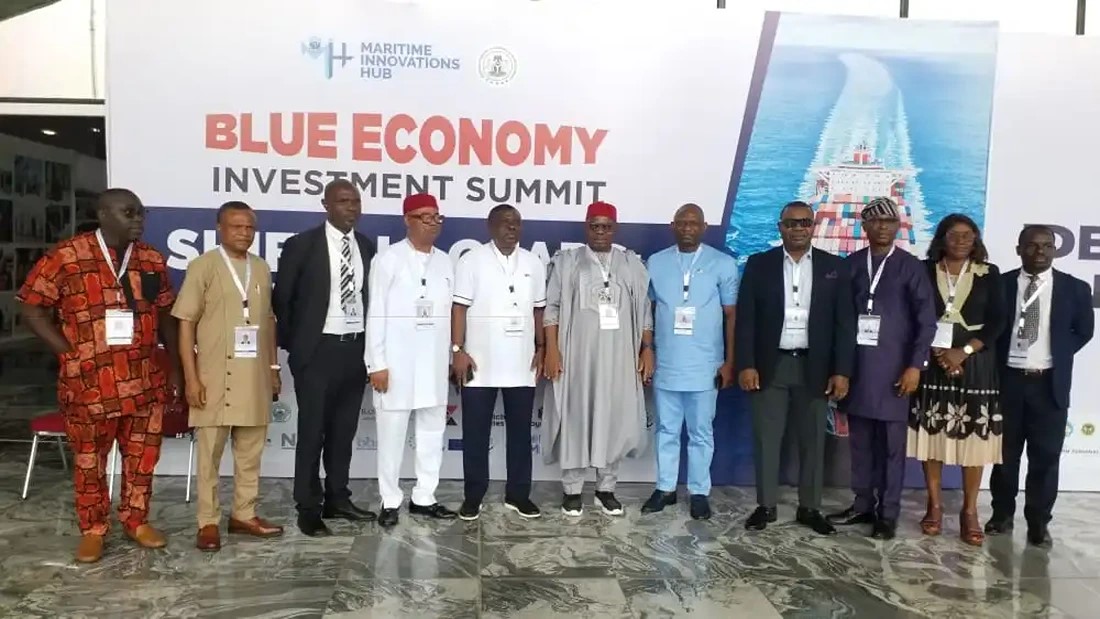
Speaking at the Blue Economy Investment Summit in Abuja, Oyetola outlined a sector that has been decisively reformed over the past two years. The Apapa gridlock, long one of Nigeria’s most damaging logistical failures has been eliminated. Piracy in Nigerian waters has been absent for more than four years. Revenue generated by agencies under the ministry surged from N700.79 billion in 2023 to approximately N1.83 trillion in 2025. Fish production climbed from 1.1 million to 1.4 million tonnes over the same period. And $746 million in financing has been secured to modernise key ports.
“Nigeria has moved from fragmentation to coordination and from insecurity to a stable maritime domain that now inspires investor confidence. For the first time in decades, we are seeing order restored in our port corridors and sustained safety across our waters,”explained Oyetola. The Minister also announced that President Bola Tinubu has approved disbursement of the Cabotage Vessel Financing Fund to indigenous ship-owners, a move expected to generate at least 30,000 jobs and reduce capital flight from coastal shipping. Nigeria has additionally regained its seat on the Council of the International Maritime Organisation after a 14-year absence.
The private sector endorsement was substantive. APM Terminals CEO Frederik Klinke disclosed that the company has invested over $600 million in Nigeria including renewable energy and port automation initiatives and cited the National Single Window platform as a development that should reduce cargo clearance to 48 hours. He called for sustained regulatory consistency and full digital integration to cement Nigeria’s competitive position. Nigerian Shippers’ Council Executive Secretary Pius Akutah struck a harder note, warning that poor maritime connectivity poses a direct threat to Nigeria’s AfCFTA ambitions. “If Nigeria must lead in AfCFTA, we must invest heavily in connectivity infrastructure like ports, rail, inland waterways and multimodal transport systems to enable seamless cargo movement across the region,” said Akutah.
With an estimated $3 trillion blue economy potential and a policy framework now in place to pursue it, Nigeria is positioning itself as the maritime anchor of West Africa. The test, as Oyetola put it, is converting dialogue into investment. He concluded, “This summit must go beyond dialogue to deliver tangible investments and partnerships. Nigeria today offers scale, stability, and opportunity for global investors.”