



Agriculture remains the undisputed engine of Africa’s economic potential. More than 60% of the continent’s households rely directly or indirectly on the land for their livelihoods, and the region holds nearly 60% of the world’s uncultivated arable land. Yet, farming across the continent is structurally fragile perennially exposed to climate volatility, weak infrastructure, shifting demographics, and market shocks. Unlocking this immense potential requires intense political commitment, capital investment, and high-quality scientific research.
Despite decades of funding, a familiar critique frequently dominates political and media debates: agricultural research is too expensive and delivers too little for the average person. But this criticism rests on a flawed premise that scientists alone are responsible for societal impact. The reality is far more complex. Global economic history, from Asia’s Green Revolution to Latin America’s agricultural booms, proves that research alone never transforms a society. True economic impact only occurs when a broader agricultural ecosystem seamlessly connects science to producers, global and local markets, financing, robust institutions, and predictable public policy.
International development institutions have long flagged the structural bottlenecks that prevent developing economies from translating scientific breakthroughs into commercial scale. Weak innovation ecosystems, deficient rural infrastructure, and fractured institutional coordination mean that even the best breakthroughs get left on the shelf.
When Asia underwent its Green Revolution, breakthroughs in wheat and rice varieties succeeded because governments simultaneously backed the science with massive capital deployments into irrigation, extension services, rural credit systems, and structured market organization. In economies like India and Vietnam, science operated inside a highly integrated web that linked researchers directly to the market.
“Science generates knowledge, informs policies, stimulates innovation and opens new possibilities. But it does not change societies on its own,” notes Pape Abdoulaye Seck, researcher at the National Academy of Sciences and Techniques of Senegal (ANSTS).
The scientific progress itself is undeniable. Recent decades have yielded massive gains in seed genetics, soil fertility management, climate adaptation, biotechnology, and digital agriculture much of it driven by African universities and international research centers. In nations like Rwanda and Ethiopia, coordinated ecosystems have successfully accelerated technology adoption, driving major productivity gains in strategic commodities like maize, rice, cassava, and soybeans.
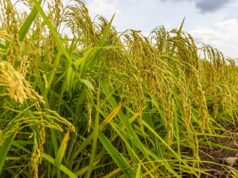
Consider the development of the “New Rice for Africa” (NERICA) varieties. Developed by combining the high-yield traits of Asian rice with the rugged climate resilience of African strains, the project was a genetic triumph. Where governments, seed distribution systems, and micro-finance institutions aligned such as in Uganda, Guinea, and parts of West Africa smallholder farmer incomes surged.
But where these conditions fail to coalesce, innovations remain trapped in research stations and pilot projects. In several African economies, farmers still cannot access certified seeds at scale due to broken supply chains. Promising tools in digital agriculture, irrigation, and post-harvest preservation frequently stall due to a lack of rural credit or basic infrastructure.
As Africa faces the existential 21st-century challenge of feeding a rapidly growing population amid climate change, viewing agricultural research as a mere cost rather than a strategic investment is an economic miscalculation. Agricultural development is a cornerstone of economic sovereignty and social stability. Blaming science for a lack of traction simply masks broader systemic failures. To scale isolated successes into continent-wide growth, Africa must deepen the institutional alliances between science, finance, public policy, and the private sector. The impact of innovation is ultimately a collective ledger.