


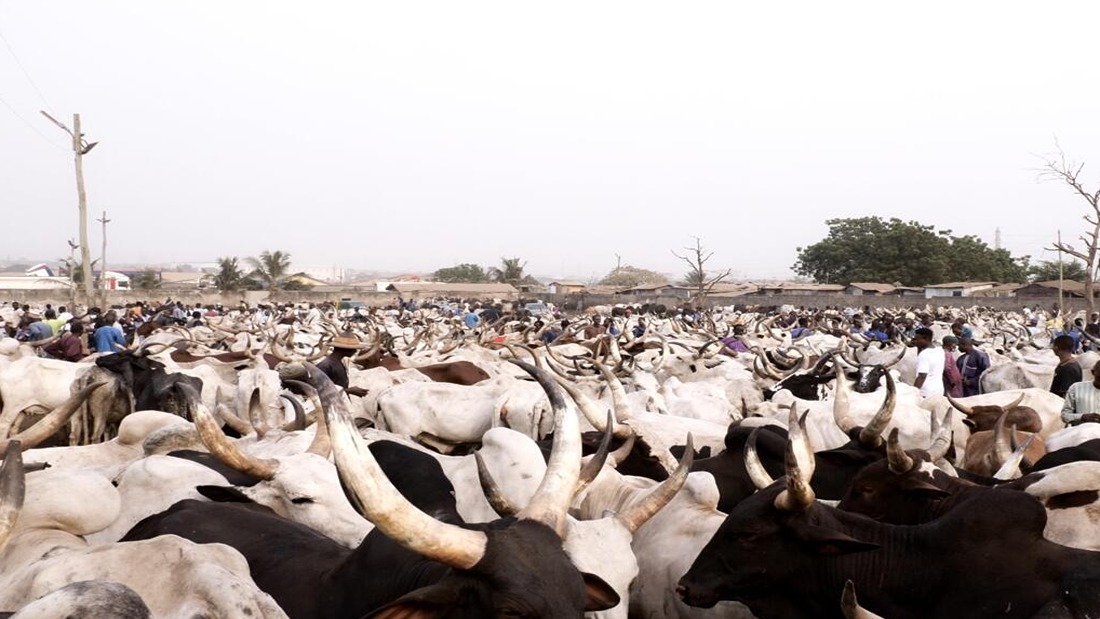
The government of Burkina Faso has suspended livestock exports indefinitely, with the government halting the issuance of Special Export Authorisations for cattle, sheep and goats in a deliberate move to prioritise domestic meat supply as the country accelerates plans to build its own processing capacity.
The restriction, which took effect on 8 May, was introduced jointly by the Ministry of Industry and Trade, the Ministry of Agriculture and the Ministry of Economy. Exporters holding valid permits were given one week to complete pending procedures before the suspension was fully enforced.
The timing follows a period of rapid growth in Burkina Faso’s live animal trade. Live cattle exports grew from 426.3 tonnes in 2020 to 5,273 tonnes in 2024. Sheep and goat exports rose from 555.7 tonnes to 8,608 tonnes over the same period. Combined exports of cattle, sheep and goats generated close to US$21.1 million in 2024, revenue that an extended suspension will reduce for traders and livestock producers.
The policy logic behind the suspension is the government’s broader strategy to shift from live animal exports to processed meat production. The Faso Abattoir Agency was established in April 2025 to oversee slaughterhouse management and modernise meat processing infrastructure. A new slaughterhouse in Banfora valued at nearly US$5 million was announced in January 2026, with additional facilities planned for Fada N’Gourma and Bobo-Dioulasso alongside renovations at existing sites.
The regional implications are significant. Ghana accounted for roughly 60% of Burkina Faso’s livestock exports by value over the past five years, with Côte d’Ivoire, Mali and Togo also among the key buyers. Much of the trade flows through informal cross-border channels not fully captured in official data, meaning Burkina Faso’s actual role in regional livestock supply chains is likely larger than recorded figures suggest. A prolonged suspension could tighten livestock availability across multiple West African markets, a consequence that neighbouring governments will be monitoring closely.