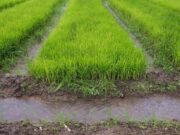




Minister for Food and Agriculture Eric Opoku has broken ground on the 175 hectare Anunuso Water Conservation Scheme at Brofoyedu, near Asokore in the Sekyere East District of the Ashanti Region, a project that should let 220 farmers in the area grow rice all year instead of waiting on the rains.
The scheme is a key component of Lot 1 of the West Africa Food System Resilience Program, known as FSRP, which aims to strengthen agricultural resilience and food security through selected inland valley irrigation projects in the Ashanti Region. The programme was developed by the government of Ghana with ECOWAS, is funded by the World Bank and is being implemented at the same time in eight other West African countries. In Ghana, its interventions span 57 districts across ten regions, namely the Upper East, North East, Northern, Bono East, Bono, Ashanti, Eastern, Central, Volta and Greater Accra regions.
Speaking at the ceremony, Opoku said the project is part of the government’s Feed Ghana Program, specifically its Irrigation for Wealth Creation initiative, which is designed to give rice farmers a more reliable water supply. Once the facility is finished, he said, farmers will be able to cultivate crops year round, depend far less on seasonal rainfall and raise both the volume and the consistency of rice production in the area.
He added that irrigation is a crucial pillar of the Feed Ghana Program because access to water is fundamental to higher crop productivity. The wider goal is to raise domestic agricultural production, cut dependence on imports, strengthen food security, create jobs and generate wealth through farming. Rice is among the priority commodities, particularly at Anunuso and other sites earmarked for similar development include Kpong, Tano and Bia, among others, as the government expands the country’s irrigated farming capacity.
According to the Minister, recent data from the Feed Ghana Program show Ghana’s rice self-sufficiency rate climbing from 42% to 56% since the programme was introduced in April 2025. Self sufficiency measures the share of the country’s rice needs that local farmers meet. Officials acknowledge, however, that storage, transport, processing and market access still hold back the initiative’s full potential.
Opoku said the government wants to build on these gains by raising rice production substantially, so that Ghana can move beyond meeting domestic consumption and sell into continental and global rice markets. He added that the project carries particular weight in a country where agriculture remains heavily dependent on rainfall and that wider irrigation would lift output while making farming communities more resilient by giving farmers greater control over their crops.
The Ministry will also engage farmer associations and coordinate the formation of a Water Users Association, which will be crucial to maintaining the facility and keeping it profitable for all users well beyond completion. Opoku was accompanied by Deputy Minister of Agriculture John Dumelo, Ministry officials and traditional stakeholders.