


Ghana is accelerating its push into precision agriculture, deploying drone technology and subsidized inputs to boost domestic food production and shield the West African economy from volatile global food imports.
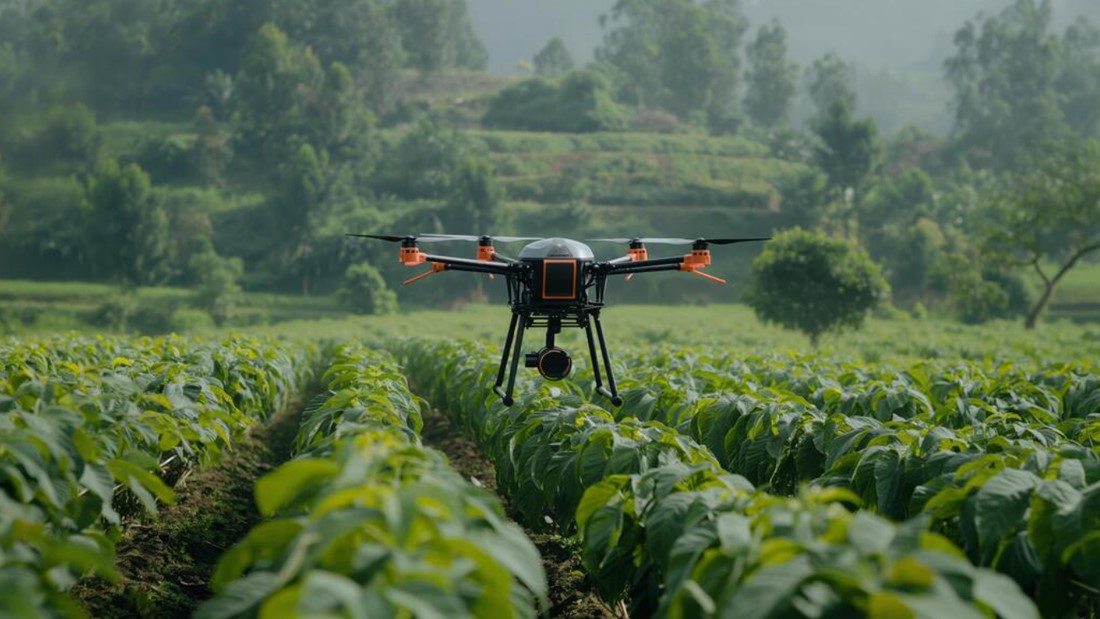
The Ministry for Food and Agriculture delivered five commercial-grade agricultural drone setups to the Peasant Farmers Association of Ghana (PFAG), alongside 40,000 bags of inorganic fertilizer. The deployment targets smallholders ahead of the major planting season in the country’s northern grain belt and the upcoming minor season in the south.
The initiative falls under the state-backed Feed Ghana Programme, a sweeping agricultural modernization strategy designed to lower input waste, improve data collection, and reverse the country’s reliance on foreign food supplies. Agriculture accounts for roughly one-fifth of Ghana’s gross domestic product (GDP) and is a critical source of foreign exchange.
“It marks a bold shift in Ghana’s agricultural journey, from guesswork to data, from traditional agricultural production practices to precision production, from low productivity to smart farming,” Food and Agriculture Minister Eric Opoku said at a handover ceremony.
The introduction of unmanned aerial vehicles (UAVs) reflects a broader trend across sub-Saharan Africa, where policymakers are turning to tech-driven “smart farming” to counteract climate shocks and high input costs. The drones will be used to map fields, monitor irrigation infrastructure, detect early-stage crop stress, and target pest outbreaks before they threaten regional yields.
Beyond improving field efficiency, Accra is leveraging high-tech agriculture as a demographic play to attract younger workers to an aging sector. The ministry views modernization as a necessary pivot to transform farming into a commercial enterprise rather than a livelihood of last resort.
“When young people see agriculture connected to drones, data, enterprise, innovation, they begin to see farming not as punishment, but as a profitable and respectable profession,” Opoku said.
The automation push comes as African nations grapple with the legacy of high fertilizer prices and supply chain disruptions. By using flight data to spot-treat crops rather than blanketing fields with agrochemicals, the ministry expects to reduce input overheads and mitigate exposure to toxic chemicals.
The drone distribution will be followed by wider investments in mechanical irrigation expansion and digital advisory networks.
“We are not simply distributing drones and fertilizers,” Opoku said. “We are distributing opportunity. We are distributing productivity. We are distributing confidence. We are distributing the future of Ghanaian agriculture.”