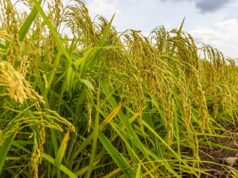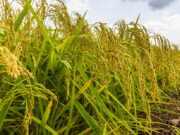




West Africa is bleeding more than $3.5 billion in foreign reserves annually to import rice, a daily staple that local farmers have cultivated for centuries but cannot scale due to chronic underinvestment.
The dependency highlights a massive economic mismatch: the region possesses vast tracts of arable land and abundant water resources, yet remains highly vulnerable to volatile global commodity markets. In 2023, member states of the Economic Community of West African States (ECOWAS) produced roughly 24 million tons of rice, leaving a 10-million-ton supply deficit that had to be covered by foreign shipments.
To stem this capital flight, regional leaders are betting on a new master plan. The ECOWAS Regional Rice Roadmap for 2025–2035 aims to achieve full rice self-sufficiency within a decade, targeting a production milestone of 34 million metric tons of milled rice by closing the region’s severe yield gaps.
The strategy pinpoints 12 high-potential production basins where concentrated capital can achieve immediate market scale. Success stories in the Senegal River Valley, spanning parts of Senegal, Mali, and Guinea, have already demonstrated that targeted irrigation and high-yield seeds can produce crop volumes rivaling the world’s most efficient agricultural hubs.
However, modernizing the archaic supply chain carries a heavy price tag. ECOWAS estimates that expanding domestic production capacity will require between $15 billion and $19 billion in fresh capital over the next ten years. While substantial, backers note the figure is easily dwarfed by the cumulative tens of billions of dollars currently projected to leave the continent via imports over the same period.
“The economics of the transformation are straightforward,” said an ECOWAS agricultural analyst familiar with the roadmap. “When smallholders, especially women and youth, secure access to high-quality inputs and guaranteed buyers at fair prices, production surges. The bottleneck isn’t the soil, it’s the missing connective tissue between the field, the modern mill, and the urban consumer.”
The regional push coincides with a major funding pivot from international development institutions. In October 2025, the World Bank Group unveiled AgriConnect, a coordinated initiative designed to modernize farming for 300 million smallholders by 2030 in tandem with the African Development Bank. Sovereign compacts under the AgriConnect umbrella have already been rolled out in Senegal, Togo, Guinea, and Ghana to create bankable agribusiness portfolios.
To convert this momentum into actual output, regional governments must first align national food security strategies with the broader ECOWAS framework and dismantle cross-border trade barriers. Public funds will need to be deployed alongside blended finance tools, which use development capital to cushion initial losses,to de-risk the sector for private institutional investors.
“Funding is ostensibly available on the global stage, but the critical bottleneck is a lack of structured, bankable projects that private equity can actually touch,” noted a development finance specialist tracking West African infrastructure. “Real transformation won’t come just from harvesting more paddy. It requires a resilient, transparent value chain where millers, traders, and financiers can manage risk with real-time market data and reliable climate forecasting.”
With the world’s fastest-growing youth demographic looking for work, the stakes extend far beyond food security. A fully capitalized, market-driven West African rice sector could ultimately unlock tens of millions of jobs across rural logistics, processing, and urban retail networks, transforming a multi-billion-dollar import liability into a domestic economic engine.