


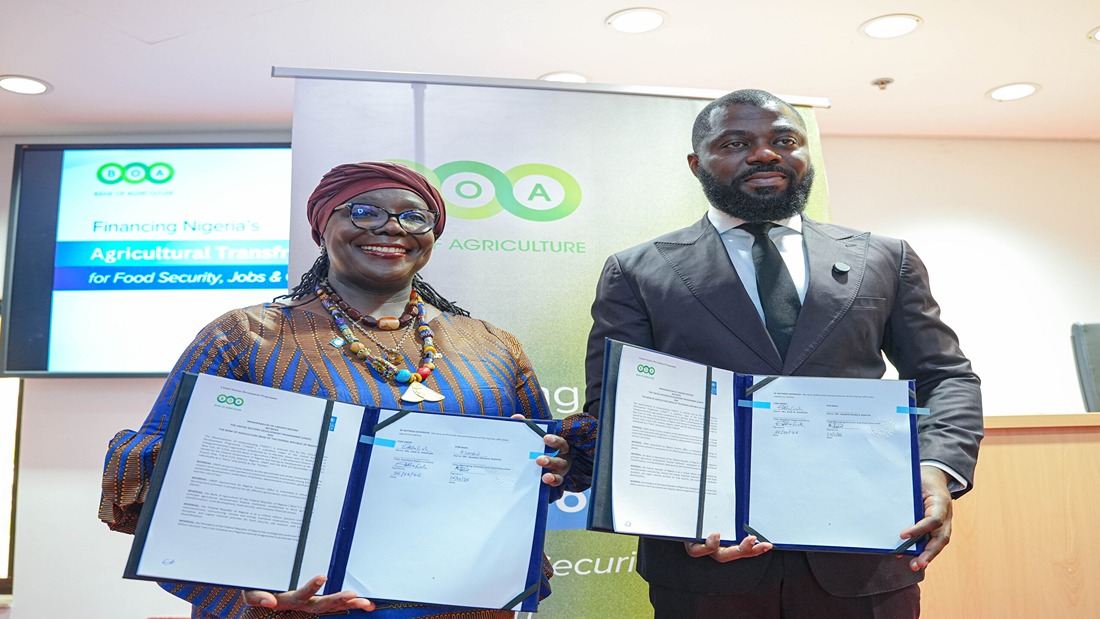
ABUJA – The United Nations Development Programme (UNDP) and the Bank of Agriculture (BOA) have formalized a strategic alliance aimed at a total overhaul of Nigeria’s agricultural financing architecture. The Memorandum of Understanding (MoU), signed in late February 2026, signals a move toward a “portfolio-based” investment model designed to crowd in private capital and climate finance for large-scale food production. Under the deal, the BOA will undergo institutional re-engineering to transition into “BOA 2.0,” a modern development finance institution capable of mobilizing the multi-billion-naira investments required to curb rising food inflation and strengthen rural livelihoods.
The partnership serves as a primary pillar for the UNDP’s Integrated Smart States Programme (ISSP), which seeks to bypass fragmented, project-based aid in favor of bankable investment pipelines. By aligning federal reforms with state-level delivery, the collaboration aims to bridge the gap between smallholder cooperatives and institutional investors. To jumpstart this digital modernization, the UNDP formally handed over a suite of high-end ICT equipment to the BOA, intended to automate credit profiling and create a comprehensive digital farmer registry essential data infrastructure for lowering the risk of agricultural lending.
“This partnership is about redesigning Nigeria’s agricultural financing and delivery architecture so that blended finance, climate finance, and private capital can flow at scale to farmers, processors, and markets,” said Ms. Elsie Attafuah, UNDP Resident Representative, during the signing ceremony at the UN House. She emphasized that the pivot from aid to co-investment is critical for translating reform momentum into “food on the table and jobs in communities.”
A centerpiece of the agreement is the operationalization of the “One Million Hectare Tree Crop Initiative,” a presidential priority targeting high-value exports like cocoa, cashew, oil palm, and rubber. The initiative is commercially structured to allocate 70% of the land to large-scale commercial entities under performance-based concessions, while the remaining 30% supports smallholders and cooperatives. By integrating these farmers into global value chains and carbon credit frameworks, the program is projected to create over two million direct and indirect jobs while reclaiming degraded lands across Nigeria’s six geopolitical zones.
“The value of this MoU will be measured not in the elegance of its language, but in the number of farmers who access finance for the first time, in the hectares brought under cultivation, and in the dollars of foreign exchange earned,” noted Mr. Ayodeji Oludare Sotinrin, Managing Director and CEO of the Bank of Agriculture. He described the partnership as a clear vote of confidence in the bank’s new direction, positioning the DFI to structure the complex agricultural pipelines that private banks have historically avoided.
The collaboration also places heavy emphasis on the African Continental Free Trade Area (AfCFTA), seeking to position Nigerian agro-processors as dominant regional players. By improving the BOA’s internal governance and delivery systems, the partners hope to unlock a surge in domestic production that can both meet local demand and feed international markets. As Nigeria navigates a challenging economic transition, the UNDP-BOA alliance is being viewed by market analysts as a necessary institutional “backbone” to ensure the nation’s agricultural potential finally meets its industrial capacity.